- Version
- Download 85
- File Size 5.86 MB
- File Count 1
- Create Date September 10, 2025
- Last Updated September 10, 2025
Ethiopia Women Parliamentarians Blueprint for Gender Transformative and Climate-Resilient Land Governance
This policy brief highlights the strategic importance of a gender- transformative approach to land governance that empowers women parliamentarians to champion equitable tenure and climate- resilient development across the IGAD region. It demonstrates how embedding women’s voices inlegislative oversight via targeted national and regional dialogues and tenure-security reforms can unlock inclusive policy, strengthen gender- sensitive budgeting and catalyse sustainable management of land and natural resources.
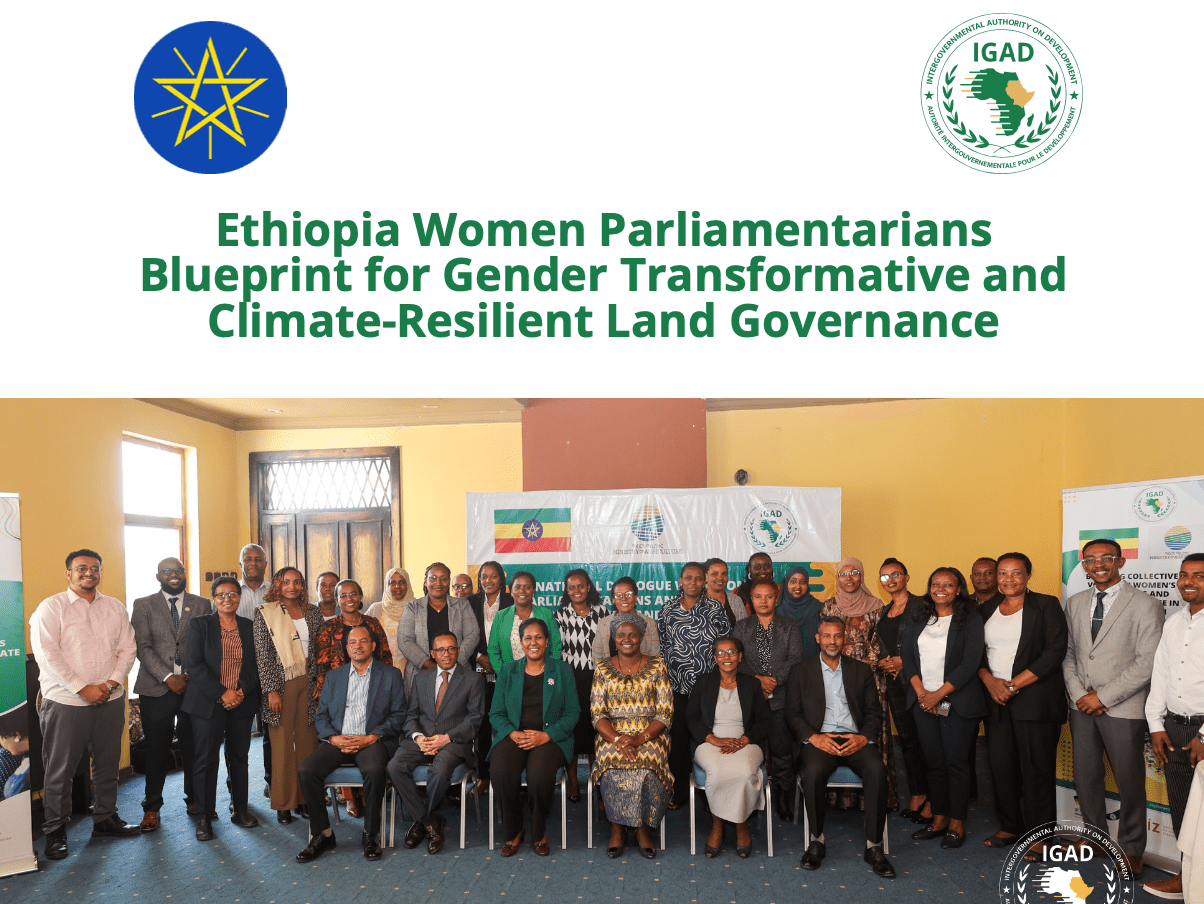
The brief builds upon the IGAD Regional Women’s Land Rights Agenda, endorsed by ministers responsible for land and gender in July 2021, and on the 2024– 25 regional gender assessment of the land sector. These foundations are being operationalised through a series of six GIZ-funded, two- day national dialogues scheduled between 12th June and 1st July 2025. On 20th– 21st June 2025 in Ethiopia, Bishoftu town, 20 women Members of Parliament convened to examine the barriers hindering women’s access to land rights and identified actionable entry points to enhance their participation in land governance, as well as in climate- resilient planning and administration at both national and county levels.
In advancing these commitments, the brief aligns with the AU’s Agenda 2063 and Framework and Guidelines on Land Policy in Africa, the Voluntary Guidelines on the Responsible Governance of Tenure and the 2030 Agenda—especially SDGs 1 (No Poverty), 5 (Gender Equality), 13 (Climate Action) and 15 (Life on Land).
Across the IGAD region and the broader Global South, women who constitute the majority of the 1.4 billion people living in poverty continue to face systemic barriers to land ownership and climate resilience. Globally, women have lower incomes, limited access to credit, fewer decision-making powers, and minimal control over productive resources. In the IGAD region, an estimated 80% of women
do not own land and can only access it through male relatives or spouses. This lack of secure land tenure significantly undermines women’s capacity to invest in long- term sustainable land use, access financial services, and adapt to climate risks. Land ownership is a critical pillar of women’s economic empowerment and a key component in building diversified, climate- resilient livelihoods for themselves, their families, and communities.
Attached Files
| File | Action |
|---|---|
| Ethiopia_Policy brief_Gender, Land and Climate Resilience.pdf | Download |