• Excellencies, Honourable Ministers,
• Director Eziakonwa,
• Distinguished representatives of the African Union,
• Our partners from the United Nations system, development finance institutions, and colleagues,
1. Thank you all very much for giving me this opportunity to address you at a moment when our continent has placed water at the centre of its political agenda.
2. The African Union’s designation of 2026 as the year of assuring sustainable water availability and safe sanitation is not ceremonial at all. It is an acknowledgement that water security runs through every aspiration of Agenda 2063 and the Sustainable Development Goals, from food sovereignty to public health, from industrial development to the stability of our communities.
3. For us here in the Horn of Africa, this carries particular urgency. Over 160 million people across our Member States live in water-stressed conditions. The 2020–2023 drought (the worst in 4 decades) affected some 50 million people across 6 consecutive failed rainy seasons.
4. Nearly half our region’s population still lacks safely managed drinking water. In Sudan, a devastating civil war has destroyed critical water infrastructure. In South Sudan, over 60% of our population lack access to sanitary facilities.
5. Cholera outbreaks have surged across the region, most notably in the republic of Sudan, demonstrating how war can take its toll on our people beyond the battlefield. These are the daily realities of mothers walking hours for water, of children falling ill from preventable diseases, of pastoralist families watching livelihoods collapse with each failed season.
6. Yet beneath these drought-scarred landscapes lies one of Africa’s most significant untapped resources. The continent holds an estimated 660,000 cubic kilometres of groundwater, which is more than 100 times the freshwater in all its rivers and lakes; of which less than 5% is utilised south of the Sahara.
7. Managed responsibly, these reserves can sustain populations through decades of climate variability. What we have lacked is not the resource, but the governance, data, and investment architecture to unlock it.
8. This is where IGAD has sought to contribute; and where we must be candid about the distance still to travel.
9. Through our Regional Water Resources Policy, through ICPAC, now a World Metrological Organisation – designated Regional Climate Centre serving 300 million people with Africa’s first transboundary drought monitoring system, and also through IDDRSI, which has mobilised over 1.7 billion dollars in resilience investment, we have built credible foundations.
10. But our regional water protocol has stalled since 2018. Our transboundary aquifer governance must be strengthened. The gap between frameworks and implementation remains too wide, and we are determined to close it.
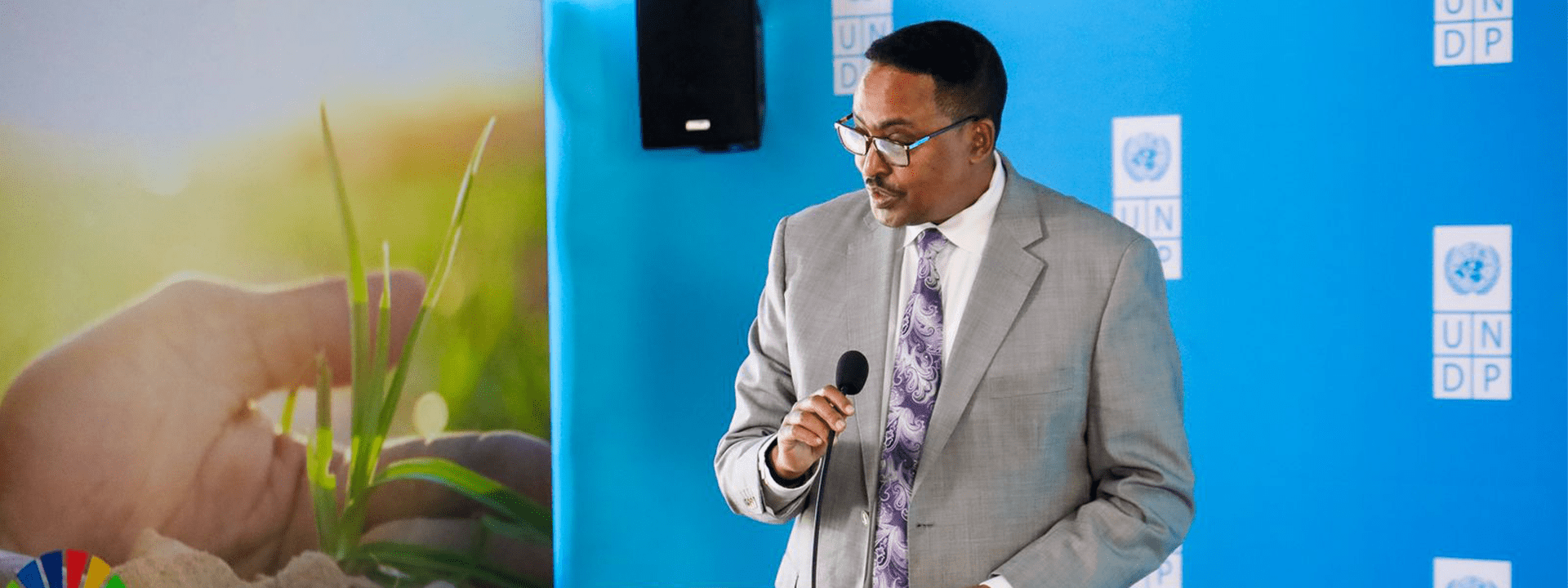
11. It is against this backdrop that the Groundwater Access Facility assumes such strategic importance. Co-developed by IGAD and UNDP, launched in Jigjiga in May 2024, GAFA has moved from concept to a two-billion-dollar pipeline of 50 strategic projects across all eight Member States, announced at COP16 in Riyadh last December.
12. This is complemented by the World Bank’s 385-million-dollar Groundwater for Resilience Programme and the new 1.58-billion-dollar Accelerating WASH Programme. The Children’s Investment Fund Foundation’s partnership with UNDP in Ethiopia’s Eastern Somali Region, that has deployed 20 solar-powered borehole systems for over 150,000 people, with drilling now underway, this demonstrates that catalytic investment, aligned with national priorities and regional frameworks, delivers results where they are needed most.
13. We meet, however, in a global financing landscape that has shifted alarmingly. For the first time in nearly three decades, major bilateral donors are cutting development assistance simultaneously. The OECD projects a decline of up to 17% in net official development assistance this year.
The effective dismantling of multilateral developmet institutions has left water projects abandoned mid-construction across at least 16 countries. Our own partners her today, project a 20% budget decline for 2026.
15. These shifts are felt in boreholes that go undrilled and disease outbreaks that follow. They demand of us not despair but strategic clarity.
16. IGAD will therefore focus on three priorities: completing our regional water protocol and strengthening the data and governance systems that underpin sound investment; supporting bankable, climate-resilient projects that attract blended finance from development institutions, climate funds, and the private sector; and working with AUDA-NEPAD and Member States to accelerate domestic resource mobilisation, because the era of aid dependency as the primary model for Africa’s water infrastructure must give way to African-led solutions.
17. Excellencies, water security is ultimately about people. The girl in Turkana who attends school because she no longer walks four hours for water. The pastoralist in the Ogaden whose livestock survive drought because a solar- powered borehole taps the aquifer beneath his feet. The mother in Baidoa whose children do not die of cholera because the water they drink is clean.
18. We have the science, the partnerships, and the political moment. What is now required is the discipline to implement and the courage to invest at scale.
IGAD stands ready to work with you as together we make thirst a forgotten memory in our region.
I thank you.

Download the attached speech in PDF.
ES OFFICIAL STATEMENT – IGAD UNDP GAFA Side Meeting 10.02.2026