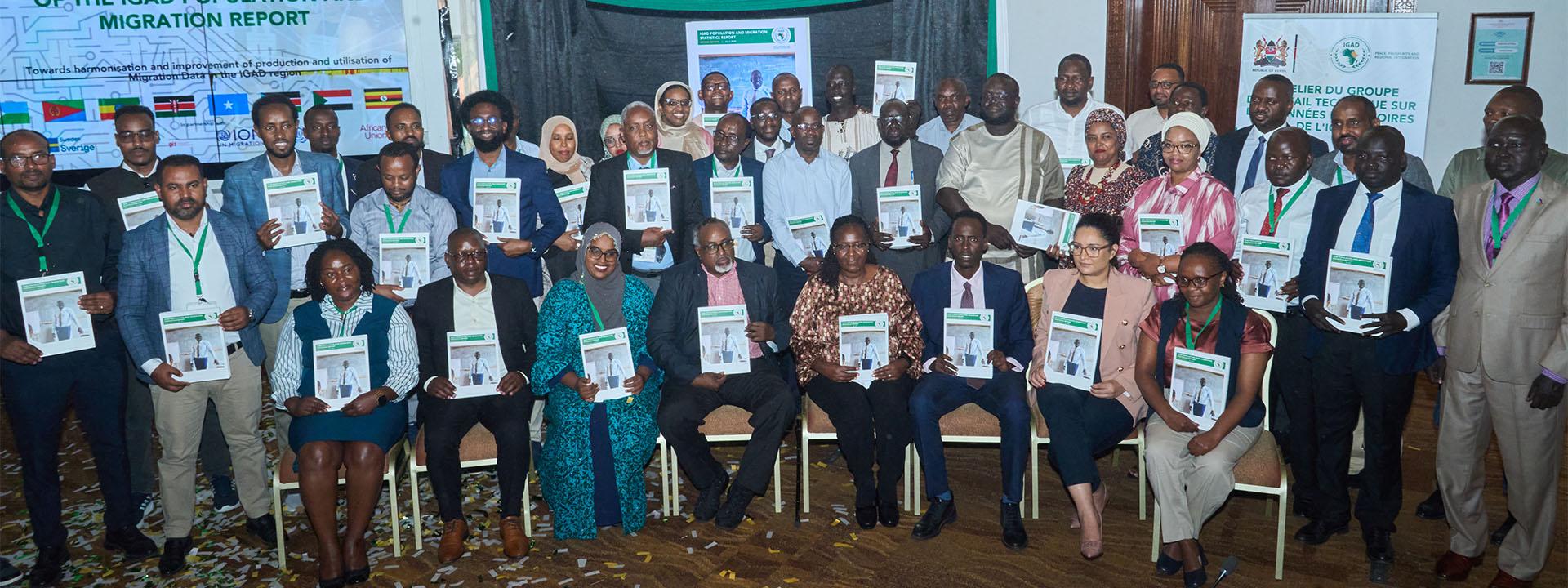
The Second Edition of the IGAD Population and Migration Report presents an updated analysis of demographic, migration, and displacement dynamics in the IGAD region (Djibouti, Eritrea, Ethiopia, Kenya, Somalia, South Sudan, Sudan, and Uganda) covering the period 2010–2022.
The report highlights the region’s rapidly growing and youthful population, rising cross-border mobility, and the complex interplay of forced displacement, labour migration, and remittance flows. The findings reinforce IGAD’s commitment to harmonising data for evidence-based policymaking in line with regional, continental, and global frameworks.
The population in the region increased from 207.5 million in 2010 to 283.5 million in 2022, with a balanced distribution between men and women. Fertility rates declined to 4.3 births per woman, while life expectancy rose to 64 years. Despite these gains, gender gaps persist in labour force participation (76.3 per cent for men compared to 62.4 per cent for women), highlighting structural inequalities that limit inclusive growth.
Migration has surged, with international migrants rising by nearly 66 percent over the past decade, reaching 6.8 million in 2022. Labour migration continues to expand, but women remain underrepresented in employment-related mobility. The report also highlights the increasing participation of youth in cross-border labour markets, noting both the opportunities and challenges for future economic integration.
Forced displacement remains a defining feature of the region. By 2022, IGAD hosted 4.3 million refugees (one in six globally) primarily from South Sudan, Somalia, and Sudan. Women and children constitute the majority of refugees and asylum seekers, intensifying humanitarian needs in host communities. Alongside this, irregular migration and trafficking are on the rise, with Uganda, Ethiopia, and South Sudan reporting significant cases that disproportionately affect youth and women.
The report underscores the socio-economic importance of remittances, which increased to US$12.3 billion in 2022, with Kenya, Ethiopia, and Somalia as leading recipients. However, weak reporting systems and fragmented data limit the ability to harness remittances for development planning. To address these challenges, the report calls for stronger national and regional data systems, better harmonisation of methodologies, improved disaggregation by sex and age, and enhanced reporting on internally displaced persons.
In conclusion, the report frames migration and displacement not only as humanitarian challenges but also as potential drivers of development, social stability, and regional integration, provided they are managed with reliable data, inclusive policies, and strong institutional cooperation.

Download final Report
IGAD POPULATION MIGRATION REPORT 2025