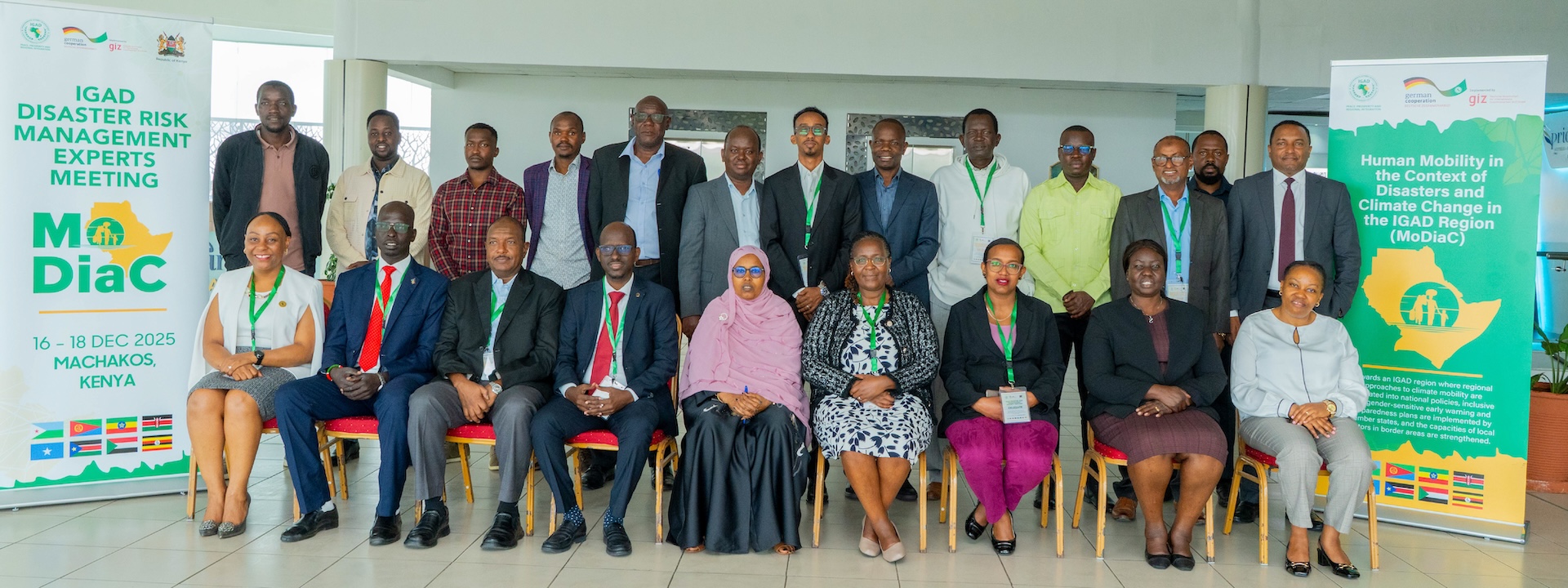
December 18, 2025 (Machakos, Kenya): The IGAD Secretariat has concluded a regional engagement under the Human Mobility in the Context of Disaster and Climate Change (MoDiaC) initiative, bringing together Disaster Risk Management (DRM) and Migration experts from Member States to strengthen capacity in managing climate-related mobility risks.
Held from 16–18 December 2025 in Machakos, Kenya, the meeting aimed to strengthen linkages between disaster risk management, climate change, and human mobility by sharing regional best practices, equipping focal points with risk assessment and early warning tools, fostering collaboration, and identifying integration opportunities under the MoDiaC framework.
Participants from IGAD Member States presented progress in the implementation of the Disaster Risk Reduction (DRR) and Mobility nexus reflecting on country priorities. The Participants also identified policy, capacity and coordination gaps hindering effective DRM implementation at Member State and regional level.
Participants from IGAD Member States presented progress on implementing the Disaster Risk Reduction (DRR)–mobility nexus, reflecting national priorities. They also identified policy, capacity, and coordination gaps hindering effective disaster risk management at both Member State and regional levels.
The IGAD Head of Mission to Kenya, Dr Fatuma Adan, representing the Executive Secretary, Dr. Workneh Gebeyehu said that strengthening Member States’ capacity to manage climate-related mobility risks protects communities and builds resilience across the IGAD region.
Dr. Fatuma remarked that natural disasters are compromising community livelihoods and negatively affecting health, agricultural productivity, peace, and stability across parts of the region.
“Climate disasters affect our countries in varying degrees, depending on the resilience of our communities, the strength of our systems, and the capacities and resources available in each context.”
She called upon all stakeholders to work together and establish a robust system to ensure preparedness and response are properly aligned in addressing climate-related disasters and risks.
Dr. William Sifuna, a Senior Officer at the National Disaster Management Unit, Government of Kenya said that key hazards, including recurrent droughts in arid and semi-arid lands, seasonal flooding, climate-related events such as landslides and heatwaves, as well coastal storm surges, were increasingly driving displacement, seasonal and pastoral mobility, and cross-border movements, trends expected to intensify with climate change.
Dr. Sifuna called for robust monitoring and evaluation systems at the national and regional levels to leverage experience, promote knowledge exchange, and enhance disaster response to climate change.
Among the key recommendations, experts called for strengthening data systems through harmonized concepts and investment in digital platforms for real-time analysis, providing technical support to Member States to operationalize DRM policies, and building capacity for early warning and anticipatory action.
Participants also called for expanding the Technical Working Groups on Migration and Displacement Statistics to include climate-induced mobility and Disaster Risk Management.
About MoDiaC Intervention
In September 2025, IGAD and GIZ launched the Human Mobility in the Context of Disasters and Climate Change (MoDiaC) Project to support the implementation of regional approaches to climate- and disaster-induced mobility aiming at strengthening institutional capacities, improve evidence-based planning, and empower local cross-border communities to better manage mobility challenges.
MoDIaC aims to equip these key stakeholders with the necessary tools and knowledge to effectively manage disaster risks related to mobility. This will not only help mitigate the impacts of climate-induced disasters but also empower communities to build resilience against future challenges.