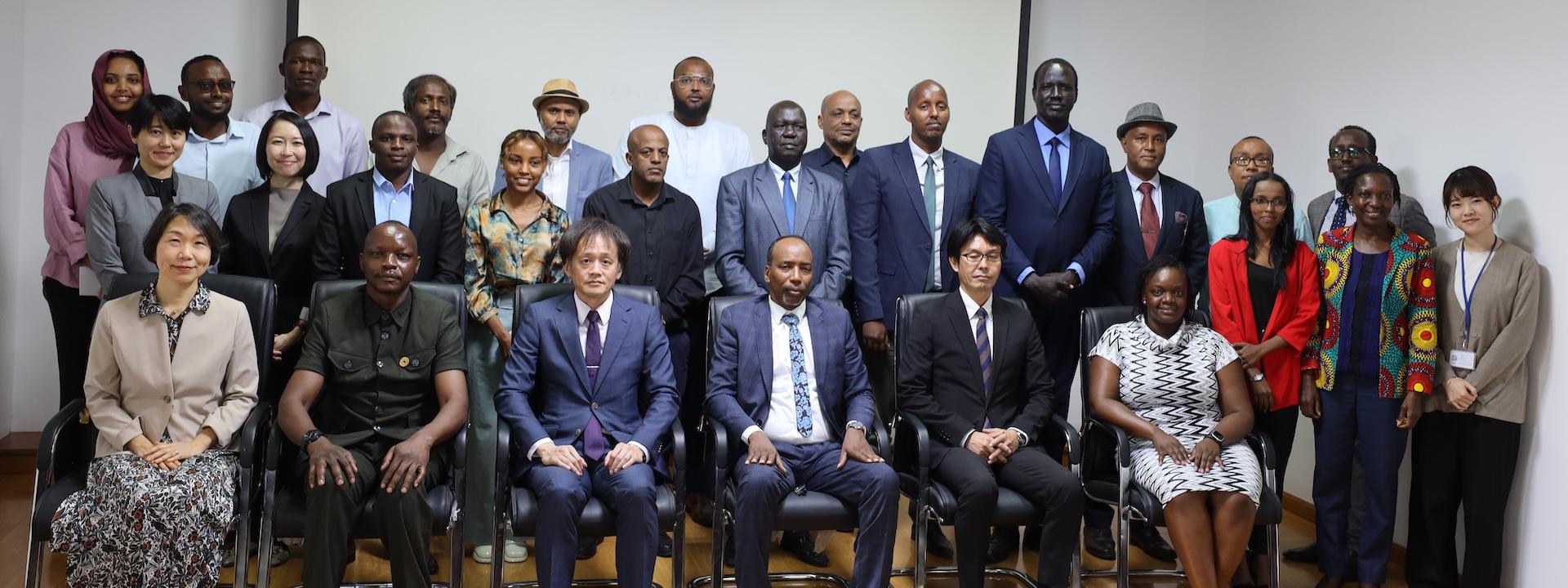
February 28, 2025 (Djibouti, Djibouti): The IGAD Secretariat with support from Japan International Cooperation Agency (JICA) conducted a 5-days training targeting Human Rights Institutions across IGAD Member states from 23rd to 27th February 2025 focusing on Business and Human Rights in the IGAD region in Djibouti city, Djibouti.
The training programme that will be spread across a 2-year period is expected to support the roll out and implementation of the IGAD Free movement of persons protocol by strengthening the skills of legal officers from IGAD member states in the field of Business and Human Rights.
Mr. Mabuya Mubarak the Chief of Staff and Interim Director for Health and Social Development at IGAD Secretariat on behalf of Executive Secretary, Dr Workneh Gebeyehu and the Interim Chargé d’affaires, Embassy of Japan to Djibouti, Mr. Hiroyuki Oshima launched the programme IGAD Foreign Service Institute, Djibouti.
Mr. Mabuya said that the programme aims at supporting IGAD Member States to address issues such as labor exploitation and human rights abuses in the implementation of the IGAD protocol on Free Movement of Persons and the journey towards regional integration.
Human Rights in Free Movement and Displacement Situations
The Free Movement Protocol recognizes the positive contribution that free movement of persons can have in mitigating the impact of conflict, poverty, unemployment and underemployment, drought and disasters, as well as the adverse effects of climate change and environmental degradation as important drivers of displacement and migration in the IGAD region.
Participant from Human Rights Institutions and Ministries of Foreign Affairs covered thematic lectures and case studies in IGAD Protocols on Free Movement of Persons and Transhumance; Forced Displacement, International trends in Business and Human Rights; Trends and issues related to Human Rights protection obligations of nations and governments. Participants were also taken through trends and issues related to corporate responsibility to respect human rights; and National Action Plans on Business and Human Rights.
Session one recommendations
Participants provided recommendations from the first session of the training in context of continued awareness raising, capacity building and establishment of learning and exchange platforms. In the area of capacity building, specific recommendations include;
In capacity building, participants sought for support for national action plans, legislation and policies; the need for technical assistance and financial assistance tailored to national contexts; broadening stakeholder mapping and the creation of online portal for self-reporting/state-of-play on business and human rights
Participants also made recommendations specific to awareness raising including, targeting duty bearers and right holders both state and non-state actors, empowerment of communities and dissemination of relevant information.
There was call for addressing conflict and fragility while establishing both bilateral and regional learning and exchange platforms.