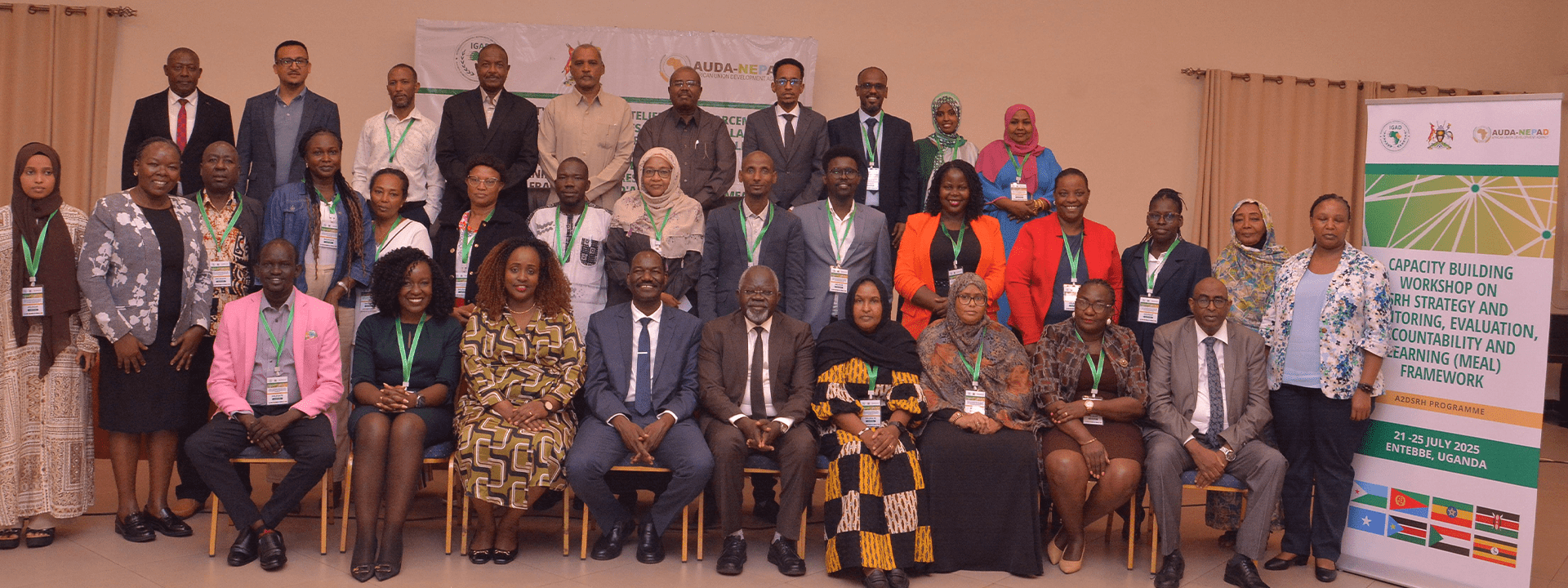
July 21, 2025 (ENTEBBE, Uganda): The Intergovernmental Authority on Development (IGAD) through its Africa Demographic Dividend and Sexual and Reproductive Health (A2DSRH) Programme has this morning embarked on a Regional Capacity Building Training of Policy Makers, Program Managers and Healthcare Professionals from the Ministries of Health, Education, Gender and Youth Affairs within the IGAD Member States with the aim of equipping stakeholders with knowledge and technical skills required for effective execution, monitoring, and evaluation of SRH initiatives and building of capacities in applying and effectively implementing the IGAD Regional SRH Strategy and its supporting tools.
Sexual and Reproductive Health (SRH) remains a crucial component of human development, influencing public health, gender equality, and socio-economic progress and it is against this background, that Member States are being equipped with tools for effective SRH policy formulation, financing, and governance for enhanced regional collaboration and harmonisation of SRH intervention. The training will also increase the knowledge and understanding of the SRH Regional Strategy for enhanced technical capacity in the use of Monitoring, Evaluation, Accountability, and Learning (MEAL) frameworks for tracking SRH national program impact.
Representing the IGAD Executive Secretary, Dr. Mohamed Elduma, the Head of Health expressed IGAD’s deep appreciation to the Member States and AUDA-NEPAD for their continued leadership and technical support in advancing Sexual and Reproductive Health across the IGAD region as an expression of commitment to improving the lives of the population in IGAD region.
“The knowledge and tools in this regional training will align our strategies, improve service delivery and ensure that our interventions are not only effective but also accountable. The MEAL framework is paramount for us to measure what matters, learn from what works, not just from the successes but also from the setbacks and adapt accordingly with renewed energy and develop a clear and actionable Roadmap” Dr Elduma concluded.
Representing AUDA-NEPAD, Ms. Celine Bankumuhari, the A2DSRH Senior Programme Officer, commended IGAD and its Member States for their leadership, commitment, and partnership in the journey of transforming the lives and futures particularly women, adolescents, and youth – envisioning a continent where every young person can make informed choices about their health and future, and where health systems are resilient, inclusive, and accountable requiring coordinated action, shared learning, and bold leadership across all sectors.
“SRH is not merely a health issue; it is a cornerstone of human dignity, gender equality, and sustainable development. It shapes the social and economic fabric of our societies and determines our ability to harness the demographic dividend and through this holistic, multi-sectoral approach of bringing together actors from health, gender, youth, and education sectors is both necessary and strategic and will equip each one of us with the tools to design better policies, deliver better, accessible and affordable quality health services, and monitor progress in real time” Ms. Bankumuhari added.
On behalf of the Republic of Uganda, Dr. Alfred Driwale, Commissioner for Institutional Capacity and Human Resources Development at Ministry of Health officiated the opening this morning implored the Member States to take advantage of the demographic dividend using a multisectoral approach for the transformation and development of IGAD Member States.
“For us to achieve our goal of longer and healthier lives, SRH interventions play a crucial role requiring attention to accessible, quality and affordable, reachable and great coverage to ensure SRH health services delivery as well as enhance healthcare training of the workforce to intervene appropriately to the needs of the citizens to make a difference” Dr. Driwale concluded.
The AUDA-NEPAD supported validation workshop is being attended by key stakeholders responsible for implementing SRH policies and programs across IGAD member states comprising of government representatives, SRH program managers and technical experts with each category playing a key role policy alignment and strategic interventions to ensure effective implementation of SRH initiatives as well as promote inclusive and equitable SRH policies that address gender-related challenges, provide responses to the needs of young populations and support integration of SRH education into curricula.