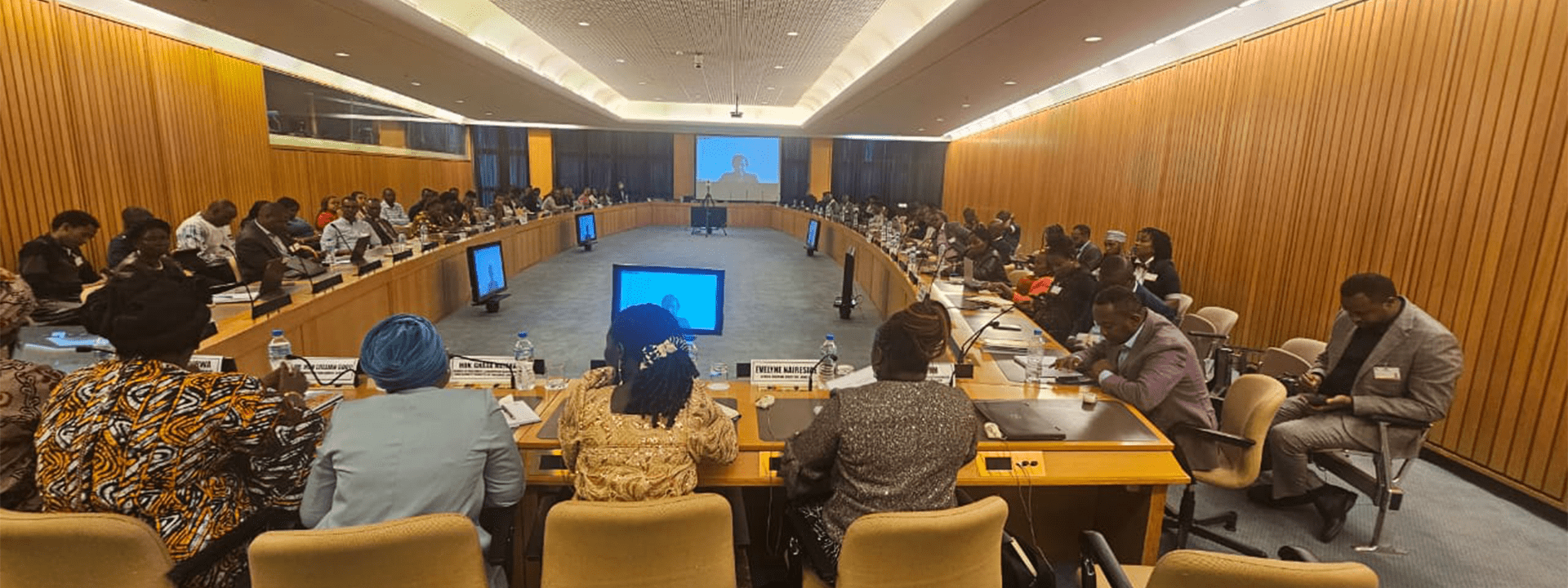
November 10, 2025, (ADDIS ABABA, Ethiopia). The Intergovernmental Authority on Development (IGAD), through its Land Governance Unit, in collaboration with the African Union Commission (AUC), African Development Bank (AfDB) and UN Economic Commission for Africa (ECA) under the African Land Policy Centre, led regional dialogues on women’s land rights, climate resilience and youth empowerment, in alignment with the conference theme and continent wide call for land justice.
OBJECTIVES OF THE CONFERENCE
Organised to run from 10 to 13 November 2025 in Addis Ababa, this biennial forum brings together policymakers, researchers and civil society to advance sustainable land governance across Africa. The theme of the Conference is “Land Governance, Justice and Reparations for Africans and Descendants of the African Diaspora.” IGAD, as a leading Regional Economic Community (REC), played a prominent role in shaping the discussions and sharing regional best practices through plenaries and side events that examined how securing equitable land rights is foundational to Africa’s development and social equity.
CONFERENCE DISCUSSIONS
Ahead of the official opening, at the pre event donor and partner roundtable, IGAD, through its Land Governance Coordinator and head of Mission to the Republic of Uganda, Joselyn Bigirwa, made a presentation outlining collective regional priorities for people centred land governance, land justice and land equity. Speaking to the conference theme, she emphasized that land governance must centre on communities and historical redress, drawing on IGAD’s experience implementing the African Union’s Declaration on Land Issues and Challenges in its Member States. She highlighted IGAD’s progress in harmonising land policies and promoting equitable access to land, including pioneering initiatives in the Somali Cluster and the Karamoja Cluster, which have strengthened conflict sensitive land use planning, helped reduce land disputes and improved tenure security for pastoral communities. IGAD also showcased its regional land governance frameworks, such as the IGAD Land Governance Business Plan (2020–2030) and the IGAD Women’s Land Rights Agenda (2021–2030), as best-practice models guiding national reforms in line with human rights and gender equality.
On Monday, the 10th of November, IGAD organised a session on “Women’s Land Rights: Faith-Based Engagement for Gender Justice in Land Governance in the IGAD Region” that explored how religious institutions can be powerful allies in advancing women’s land rights. The session brought together women land activists from across the region and Islamic and Christian religious leaders from the Mandera and Karamoja clusters that have collaborated with IGAD in advancing women’s land rights and developing knowledge materials on women’s land rights. The panel shared IGAD’s lessons from working with Muslim communities in Somalia, Ethiopia and Kenya in the Somali Cluster to promote women’s rights to land. The panellists explained how the IGAD Women’s Land Rights Agenda and community dialogues with religious elders have helped challenge discriminatory norms, leading to tangible improvements in women’s access to land in pastoralist areas.
Faith leaders from across the region echoed these insights. Imam Abdirizak Abdullahi Abdow of Mandera, Kenya, highlighted examples where Islamic principles were used to support women’s inheritance and land ownership rights, and emphasized that clergy often sit on local land dispute councils and can leverage their influence to ensure fair outcomes for women. Mrs. Yalemzewid Demisse, Head of Land Administration in Ethiopia’s Ministry of Agriculture, provided a government perspective, detailing national efforts to secure women’s land access and urging closer policy collaboration with faith institutions to overcome social barriers. The discussion underscored that in many African communities, religious norms hold immense sway, sometimes even more than formal laws, and thus represent a strategic entry point for change.
On the same day, during the session on “Enhancing Women’s Tenure Security for Climate Resilience” organised by IGAD at the Africa Land Policy Conference, speakers highlighted that secure land rights for women are essential to advancing climate justice and community resilience. Joselyn Bigirwa emphasized the need to expand women’s participation in decision-making and build their capacity to overcome traditional barriers that limit access to land. Panellists agreed that tenure security goes beyond access, as it entails legal recognition and the ability to own, control and make decisions over land. The discussion highlighted that secure land rights empower women to invest in sustainable practices such as agroforestry, soil restoration and water conservation, which directly enhance climate adaptation at the community level.
Representing the African Development Bank (AfDB), Ms. Rita Effah reaffirmed the Bank’s commitment to integrating land tenure security within its Africa Climate Change Fund (ACCF), emphasizing that “climate resilience cannot be achieved without land security.” She outlined AfDB’s ongoing partnership with IGAD in Uganda, Kenya and South Sudan, which has demonstrated how linking policy with community-led interventions yields tangible results. The session concluded with a call for stronger multi-stakeholder coordination among governments, parliaments, traditional and faith leaders and civil society to scale successful initiatives, consolidate lessons and ensure that women’s land rights remain central to Africa’s climate resilience and development agenda.
IGAD’S SUPPORT AND NEXT STEPS
IGAD is also organizing a session elevating the role of Africa’s youth in land governance that is slated for 12 November. The side event “Youth at the Forefront of Land Justice and Climate Resilience: Voices for a Just Future’’ will bring the perspectives of the next generation to the forefront. The session aligns with IGAD’s push to empower youth as change agents in land and natural resource management. The panel brings together IGAD staff from the Mandera Cluster, speaking to the realities of youth in pastoral border communities, civil society partners as well as Member State representatives. In line with the conference’s justice theme, this dialogue aims to position youth not just as beneficiaries but as drivers of land reform and climate resilience, working hand-in-hand with institutions like IGAD.
As the Africa Land Policy Conference 2025 moves towards its conclusion, IGAD’s delegates are helping craft a collective communiqué that will capture the conference’s findings and recommended actions. IGAD and its partners are steering the region toward a future where equitable access to land underpins peace, prosperity and resilience for all. The outcomes from Addis Ababa will feed into IGAD’s ongoing programmes and the African Union’s land initiatives, ensuring that the momentum for land rights, justice and sustainable development continues long after the conference ends.