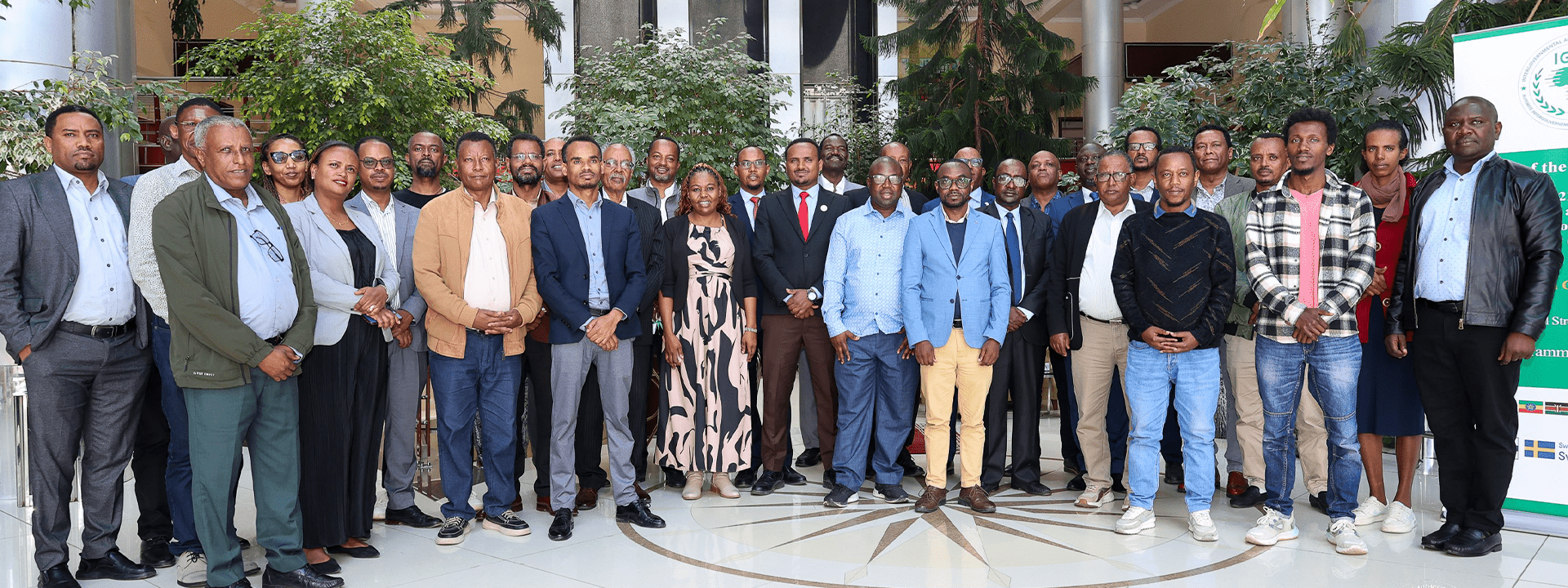
August 25-29, 2025 (ADDIS ABABA, Ethiopia): The Intergovernmental Authority on Development (IGAD), together with the Ministry of Foreign Affairs of Ethiopia, hosted a dedicated national consultation in Addis Ababa to reflect upon the progress of the IGAD Strategy 2021–2025 and contribute insights to inform the development of the upcoming IGAD Strategy 2026–2030.
The event convened a diverse assembly of stakeholders, including senior government representatives, technical specialists, academic contributors, civil society organisations, and representatives from development agencies. The purpose of the gathering was twofold: to assess the impact and challenges of the current regional strategy, and to articulate Ethiopia’s priorities in alignment with regional aspirations.
At the outset, Mr. Siraj Abdella Ahmedie, Director of IGAD Affairs at Ethiopia’s Ministry of Foreign Affairs, set the tone with a forward-looking message:
“This National Consultation is not only a review of past performance but also a forward-looking effort to integrate Ethiopia’s national priorities in the newly framed IGAD Strategy that is realistic, responsive, and mutually strengthening between national development goals and our collective regional vision.”
He emphasised the critical importance of embedding Ethiopia’s Ten‑Year Development Plan (2021–2030) within the dialogue, ensuring coherence between national aspirations and the broader IGAD Vision 2050.
The consultation was also attended by Dr. Awira Anthony, Director of IGAD’s Planning, Coordination and Partnerships Division, who underlined IGAD’s commitment to facilitating inclusive and participatory processes in the formulation of the new strategy.
Over the course of the consultation, experts from various ministries, academic institutions, civil society, and development partners engaged in substantive discussions. These deliberations are meant to generate robust inputs for both the retrospective evaluation of the outgoing strategy and the forward‑looking formulation of IGAD’s 2026–2030 strategy. The process is being overseen by IGAD’s Planning, Coordination and Partnership Division, in cooperation with Adapt Capital Africa, as part of a comprehensive regional effort taking place across all Member States between August and September 2025.
The insights gathered during this session will be synthesised into a national report, which will be integrated into a regional consolidation informing the next IGAD strategic cycle. By fostering an inclusive, evidence-based consultative process, the aim remains clear: to craft a strategy that is simultaneously grounded in national realities and aspirational for regional resilience, prosperity, and integration.