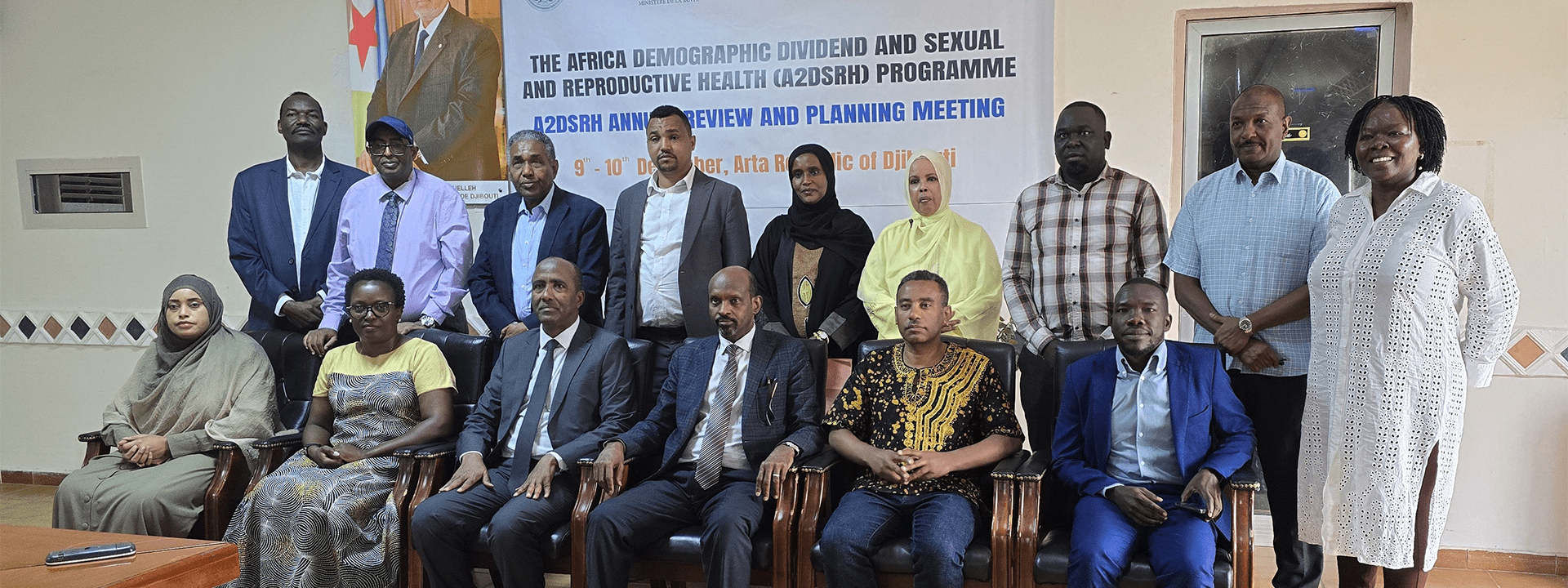
December 9, 2025 (ARTA, Djibouti): The Intergovernmental Authority on Development (IGAD) through its Africa Demographic Dividend and Sexual and Reproductive Health (A2DSRH) Programme, this morning kicked off its Annual Review and Planning Meeting to assess its achievements, challenges, and lessons learned from the implementation of the A2DSRH Programme in the year 2025 in order to guide the next phase as well as develop a comprehensive and actionable workplan for 2026.
This meeting is also aiming to facilitate knowledge exchange and peer learning among IGAD Member States; strengthen regional coordination and institutional mechanisms for SRH and demographic dividend programming and improve domestic health financing mechanisms.
During the official opening; Amb. Moussa Meigague, the IGAD Director of Health and Social Development in his official remarks, appreciated the invaluable support from AUDA-NEPAD for partnering with IGAD to advance the sexual and reproductive health agenda across the region. He also appreciated Member States’ commitment, and dedication in advancing the health and well-being of the IGAD citizenry especially the youth.
“In the past one year, we begun to operationalize a regional vision that places sexual and reproductive health, youth empowerment, and multisectoral collaboration at the heart of sustainable development thus making the first steps toward harnessing the demographic dividend and investing in the future of our region” Amb Meigague said.
Amb Meigague implored the Member States to ensure that every young person in the region has access to quality sexual and reproductive health services, education, and economic opportunities by building systems that are inclusive, resilient, and accountable.
On behalf of the IGAD Chair and host country, Mr. Mohamed Ali Mohamed, the Secretary General of the Ministry of Health, officiated the meeting. He appreciated the efforts and commitment by IGAD Member States and partners towards improved access to family planning services, reduced maternal and neo-natal mortality, development of comprehensive sexuality education programs, strengthen community health systems among others.
“Despite the gains, there is much to be done because the challenges continue to persist and are crosscutting, these include and are not limited to; disparities between urban and rural areas, unmet family and adolescent demand for family planning and social cultural barriers hindering the youth to access information and SRH services as well as limited trained medical personnel and resources”
He called upon the Member States and partners to intensify regional collaboration for the realization of each Member State’s goals aligning with the regional objectives through the strengthening of their national SRH national plans and frameworks in order to improve the availability of SRH services and information within the countries, cross border and mobile communities.
The meeting is being attended by Directors of Sexual and Reproductive Health (SRH), SRH National Focal Points and Health and Social Development and A2DSRH Programme staff.