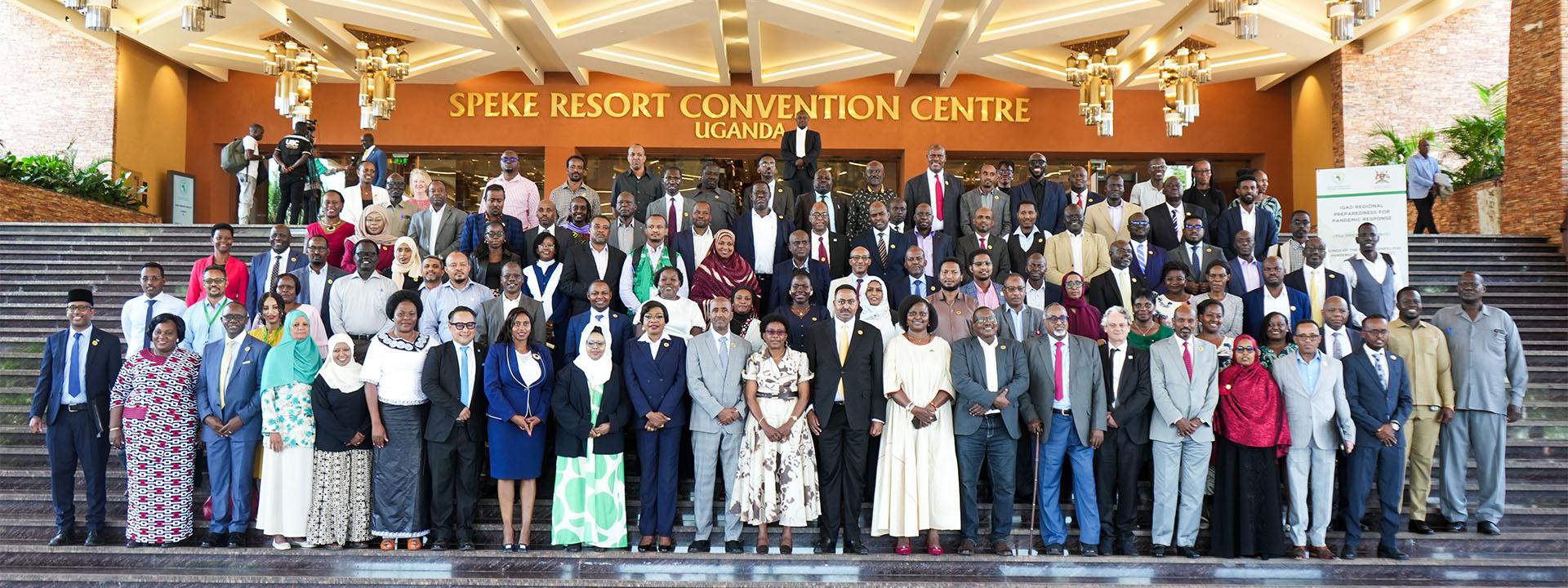
August 29, 2025 (KAMPALA, Uganda): The Intergovernmental Authority on Development (IGAD), in partnership with the World Health Organisation (WHO) and the International Federation of Red Cross and Red Crescent Societies (IFRC), today launched the Preparedness for Pandemic Response (PREPARE) Project to strengthen pandemic preparedness, response, and resilience across the IGAD region. Anchored in the One Health approach, PREPARE is a multi-country, multi-sectoral initiative designed to address transboundary health threats.
The IGAD Member States, Djibouti, Ethiopia, Kenya, Somalia, South Sudan, Sudan, and Uganda, face persistent risks of infectious disease outbreaks with significant public health, socio-economic, and global implications. Fragile health systems are continually challenged by recurrent epidemics, while high levels of cross-border movement of people, livestock, and goods heighten the risk of disease spread across national boundaries.
To address these challenges, IGAD, with funding from the Pandemic Fund, is implementing the three-year PREPARE Project, valued at US$31.9 million. WHO serves as the implementing entity and fiduciary agent, while IFRC is the delivery partner. With IGAD as the regional entity, the project aims to enhance regional and cross-border public health capacities that are critical for safeguarding health security and resilience.
PREPARE will focus on four priority areas across IGAD Member States:
- Cross-border surveillance and early warning: Establish and strengthen integrated surveillance and early warning systems in border areas.
- Laboratory capacity: Enhance diagnostic and laboratory capabilities to rapidly detect and confirm epidemic-prone diseases.
- Workforce development: Build regional workforce capacity for One Health emergency preparedness and response, with strong community engagement.
- Coordination and advocacy: Promote evidence-based advocacy and inclusive coordination mechanisms for sustainable epidemic and pandemic preparedness.
The project has already supported Uganda’s recent response to the Mpox outbreak through the provision of essential laboratory supplies, logistics for sample referral, beds and beddings for isolation facilities, and IT equipment to strengthen reporting systems.
The IGAD secretariat has today handed over these supplies, valued at approximately USD 700,000, to be used in supporting capacities at the national and subnational levels to contain the outbreak. These supplies include:
- Laboratory equipment and consumables for the diagnosis of Mpox.
- Three (3) vehicles for coordination and sample referral.
- Ten (10) motorcycles for sample referral, outreaches and contact tracing.
- Information and Communication Technology equipment including desktops and laptops for data capture.
- Communication equipment, including phones and internet routers.
- Mobile phones for communication.
QUOTES
“COVID-19 taught us that pandemics do not respect borders and that the cost of being unprepared is measured in lives lost, livelihoods destroyed, and economies disrupted. The PREPARE Project builds on those lessons, ensuring that, as a region, we are better equipped to detect threats early, respond collectively, and protect our people from future pandemics.” – H.E. Dr. Workneh Gebeyehu, IGAD Executive Secretary.
“The second phase of the PREPARE project implementation should prioritise four strategic intervention areas, complemented by a flexible contingency funding mechanism housed within the IGAD national office. – Dr Ruth Aceng, Uganda Minister of Health.
“By investing in resilient health systems, enhancing cross-border collaboration, and embracing the One Health approach, we are ensuring that countries across the IGAD region are better prepared to prevent, detect, and respond to future pandemics. No country is safe until all are safe.” – Dr Kasonde Mwinga, WHO Representative, Uganda– WHO.
“National Societies of the Red Cross and Red Crescent are extremely proud to partner with national governments, IGAD, and WHO in this important programme investing in community, cross-border, national, and regional epidemic and pandemic preparedness. Funding from the Pandemic Fund has enabled us to expand response and prevention efforts for the mpox outbreak in the region. It will also leverage our unparalleled community outreach to scale up preparedness and strengthen systems for future epidemics, in close support of public authorities.” – Charles Businge, IFRCA Regional Director, Africa.

For Media interview, contact
Austine Opata
Head of Communication Unit – IGAD